Dagrada-Giannini 750 Sport
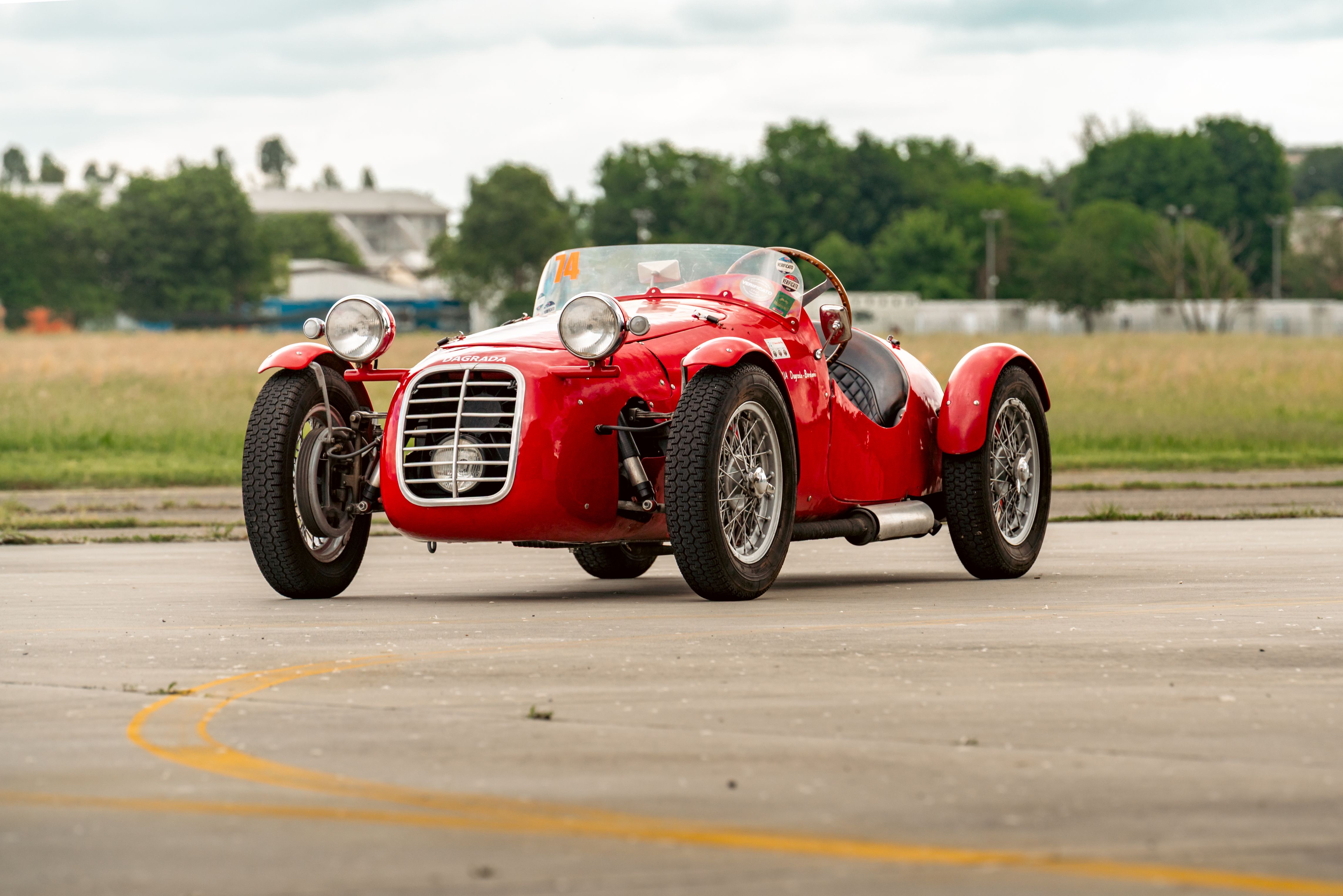
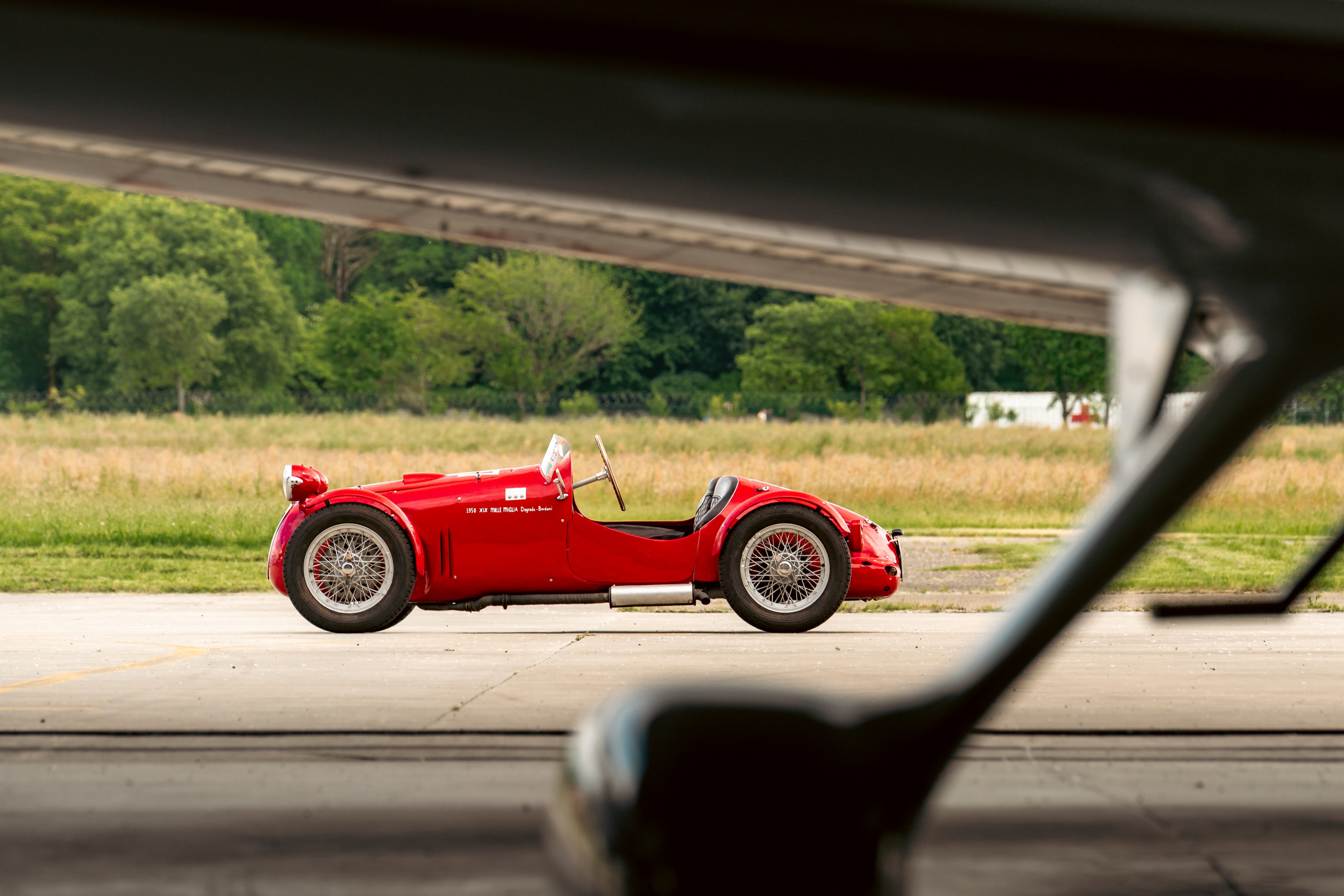
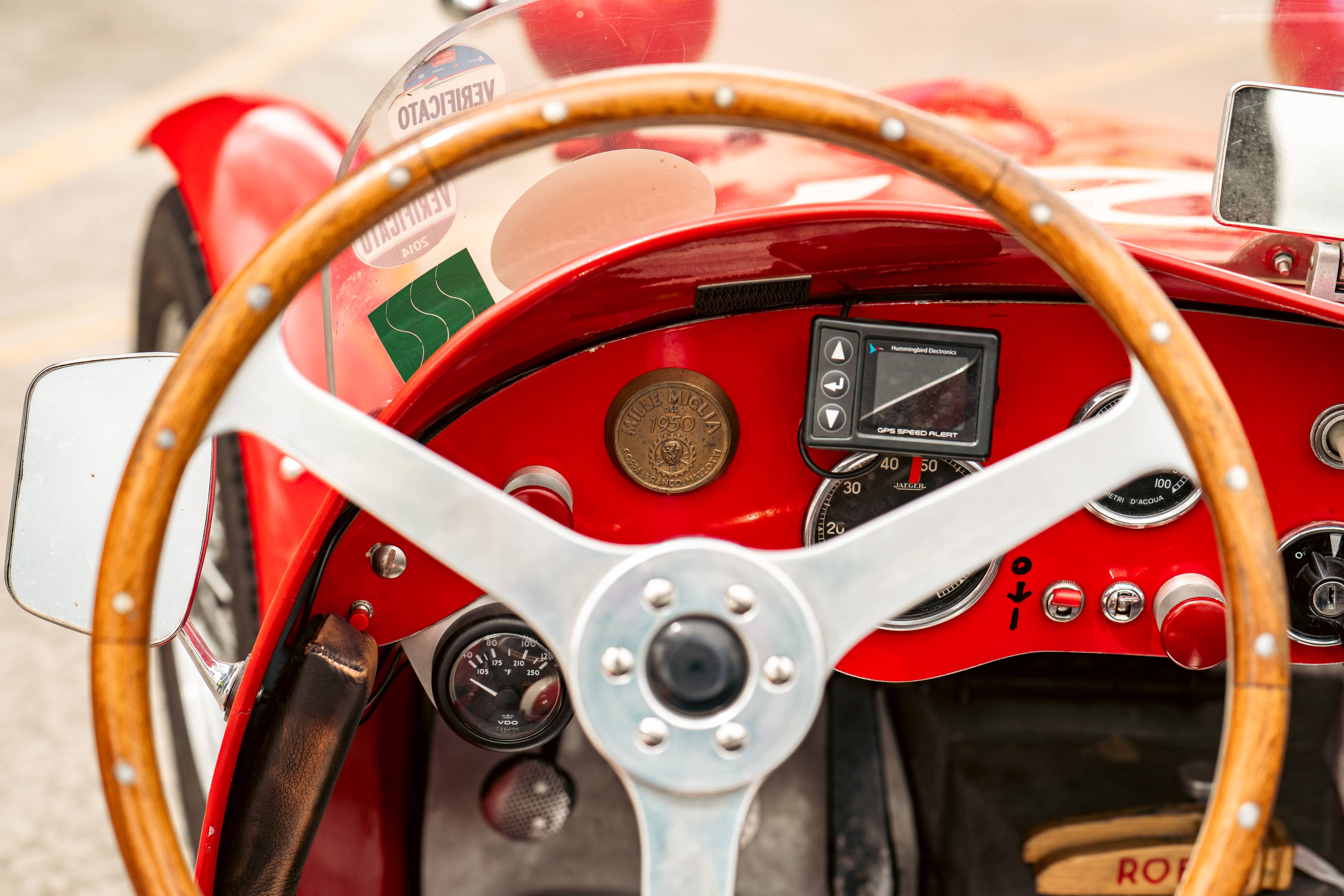
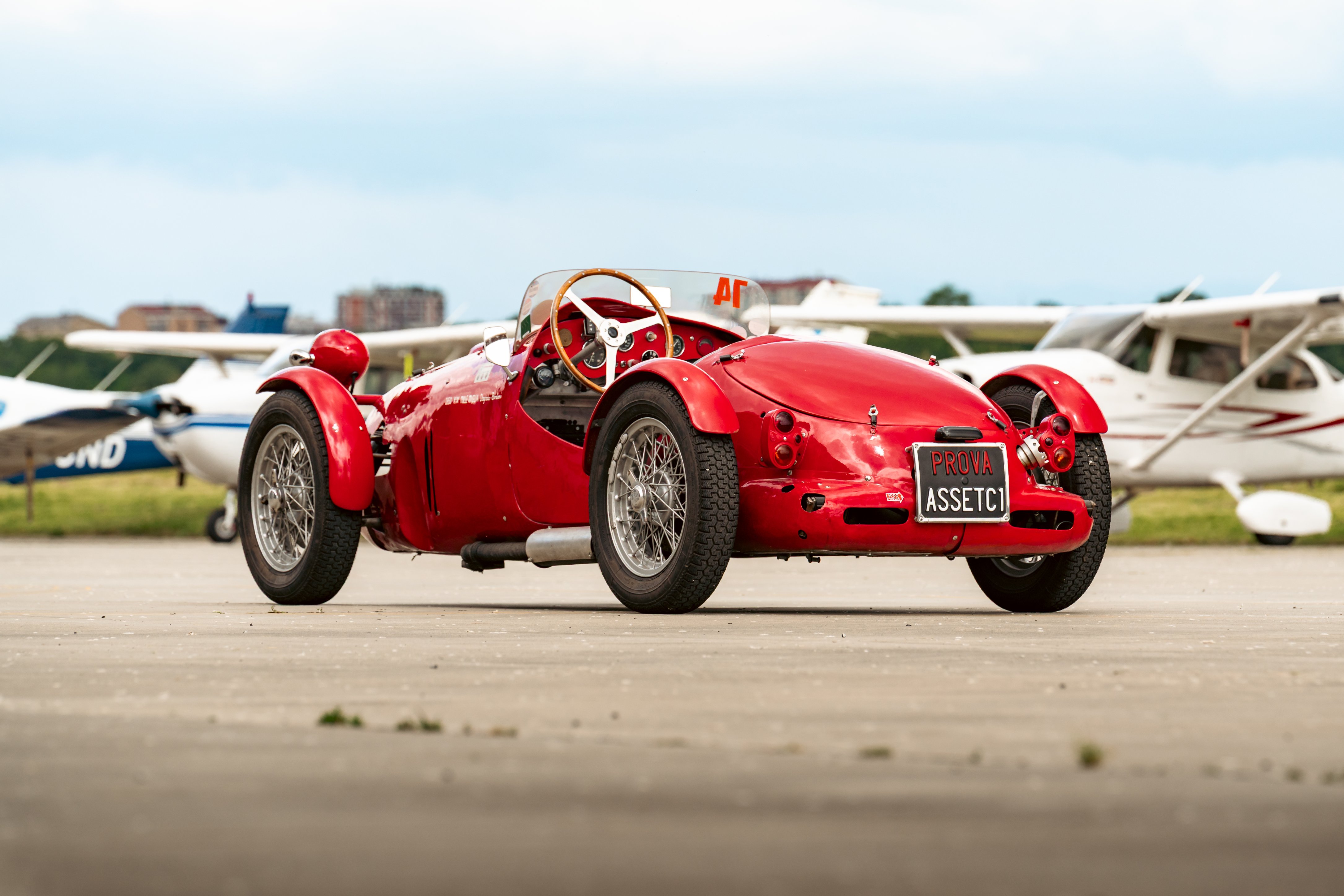
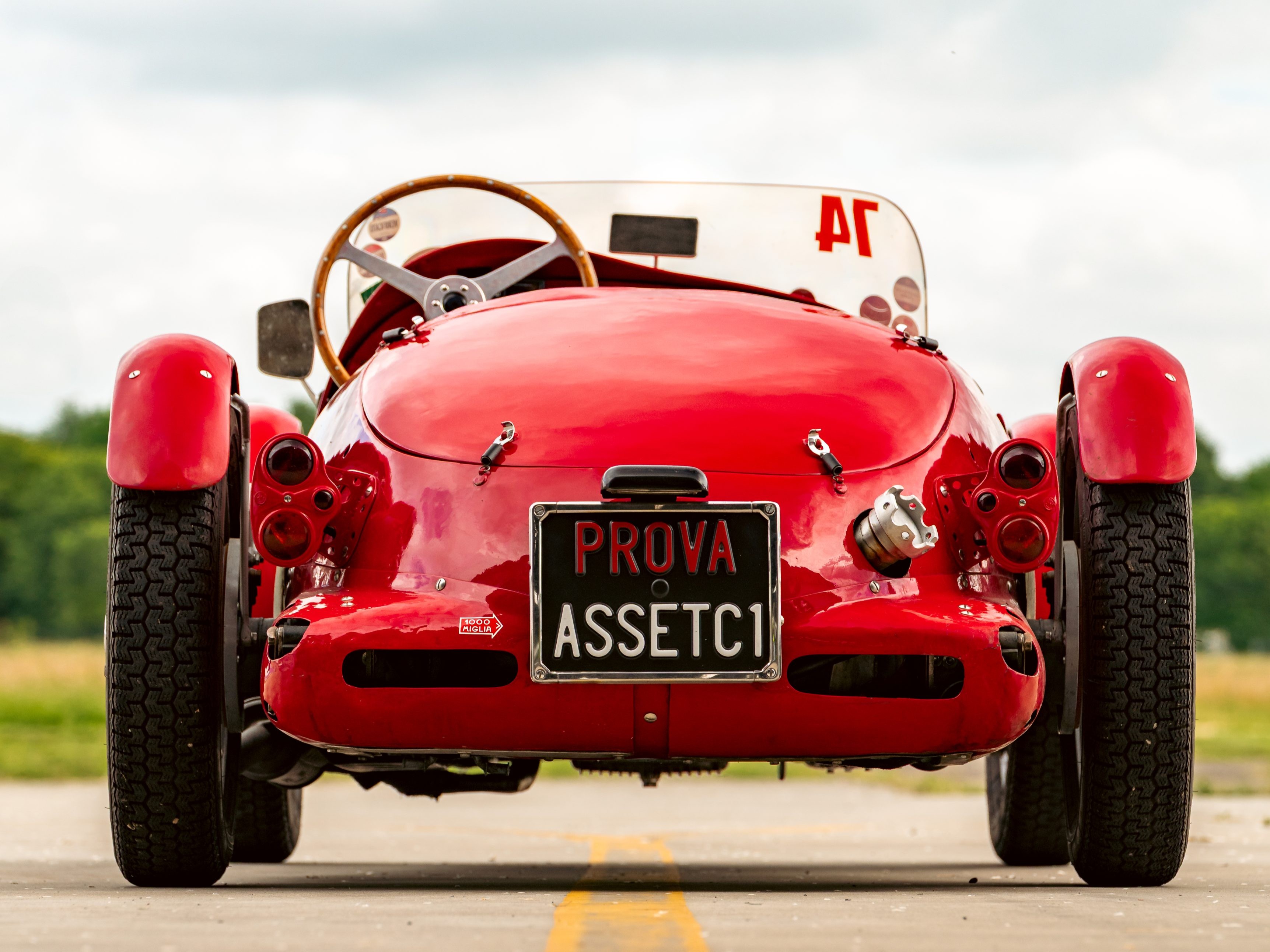
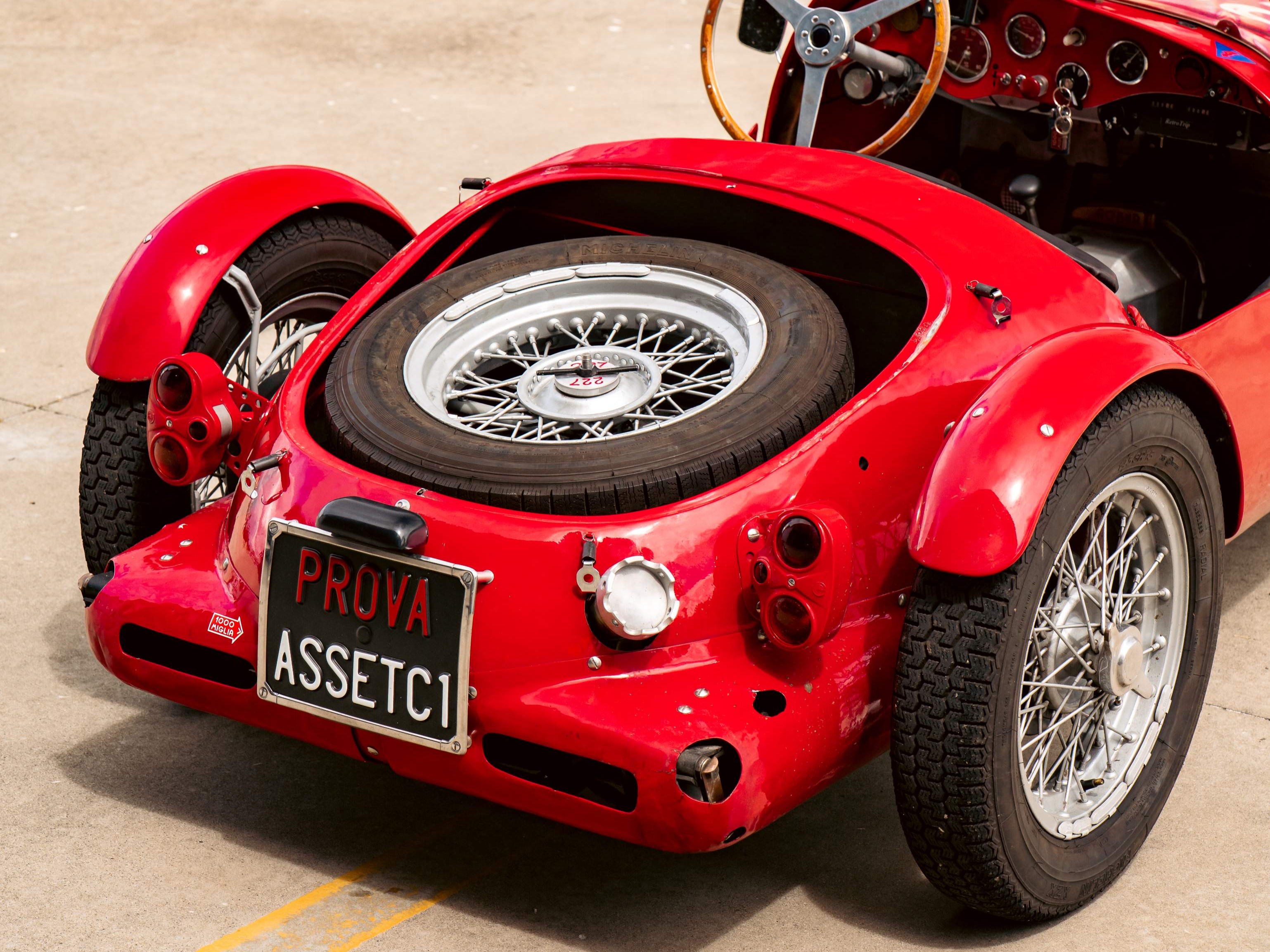
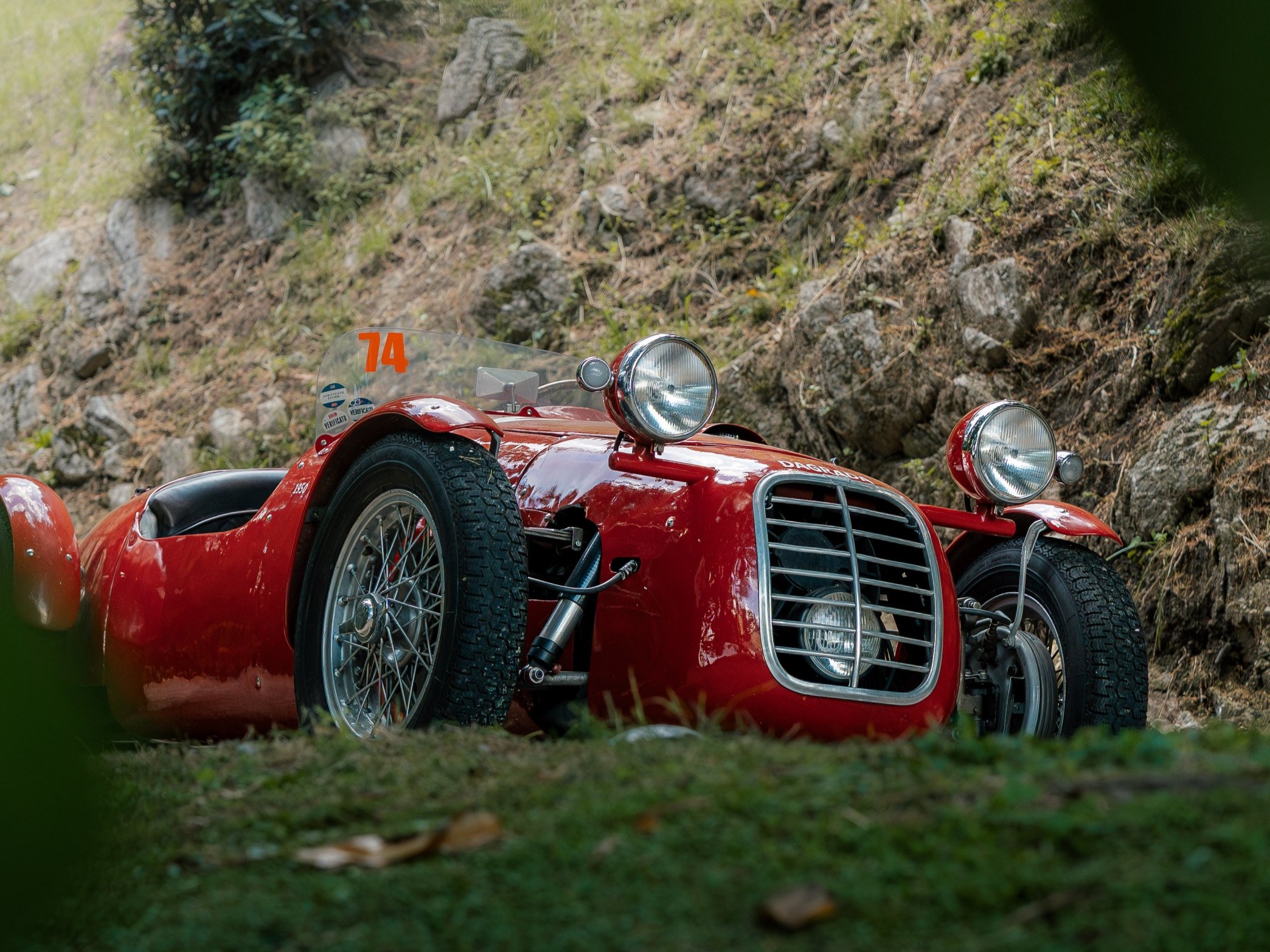
Conceived for the racetrack in the very heart of Milan, this 750 Barchetta was shaped in 1949 by the so-called “Wizard of Speed,” the deft-handed Angelo Dagrada. He built three sister cars, of which this example is the sole survivor, each constructed around a bespoke chassis, clothed in a lightweight aluminium “siluro” body, and powered by a Giannini G1 750 engine further refined with period modifications.
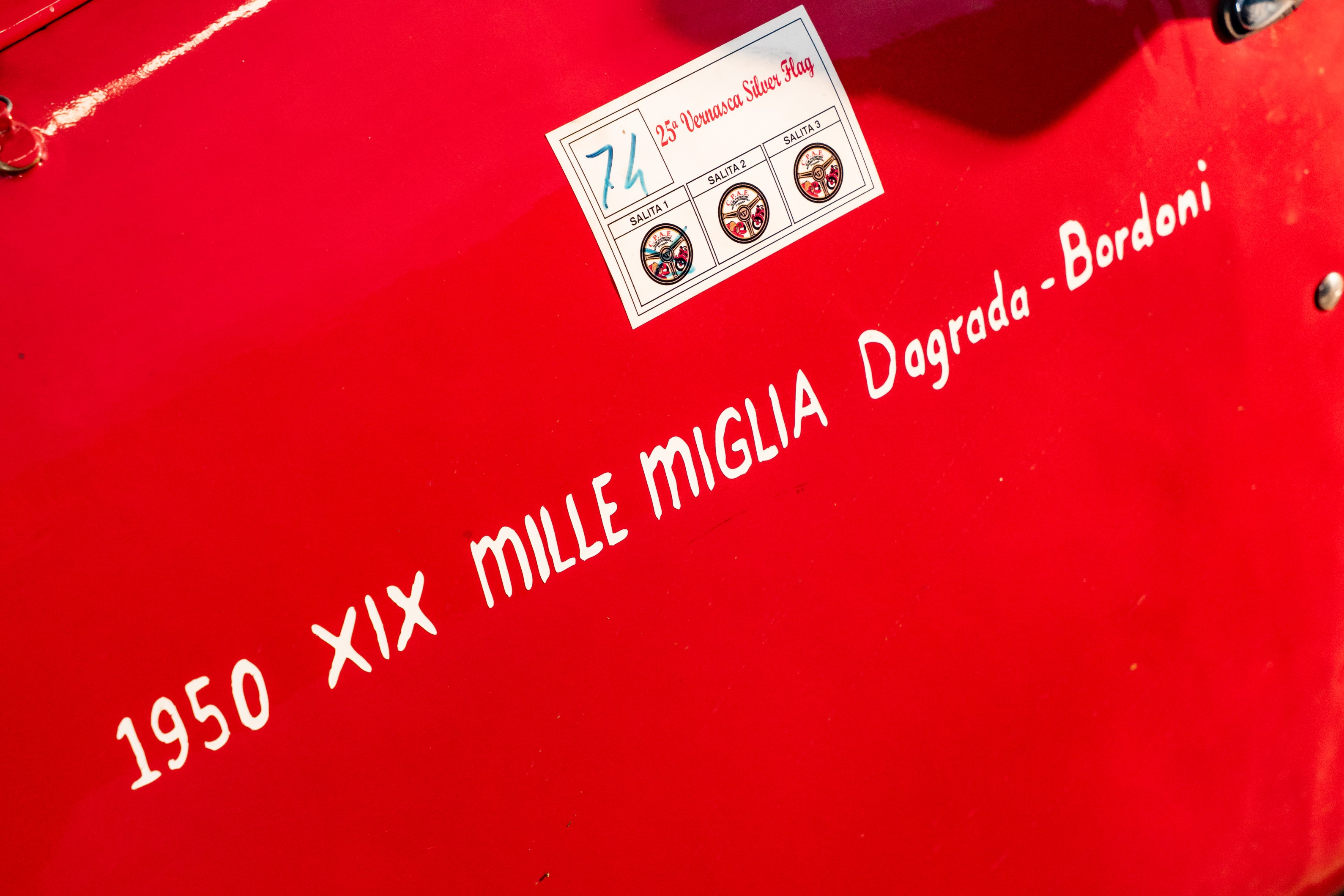
Initially campaigned as a works entry, the car was soon sold to Dagrada’s friend and sports car champion Franco Bordoni-Bisleri, a highly decorated Italian fighter pilot credited with nineteen aerial victories over North Africa. Under Bordoni’s command, this Barchetta enjoyed a successful competition career throughout the 1950s, securing 17 podiums and 11 victories between class and overall.
Exhibited at the 2025 FuoriConcorso Velocissimo and featured on Petrolicious.
.jpg)
(3)-1.jpg)
.jpg)
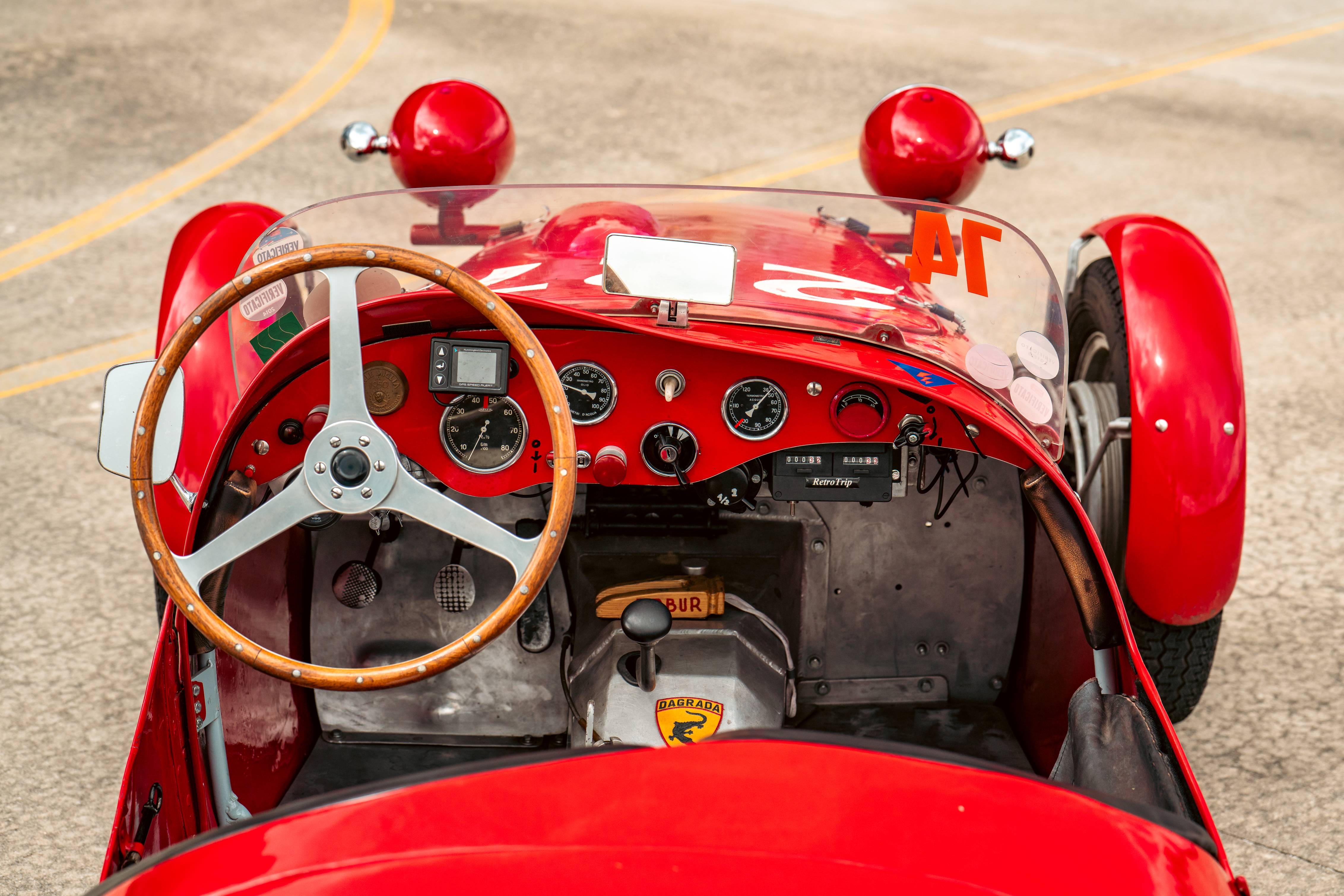
Franco Bordoni-Bisleri was born in Milan on January 10, 1913, into one of Italy’s most prominent industrial families. His grandfather, Felice Bisleri, had founded the renowned Bisleri pharmaceutical and spirits company, and the family crest, featuring a rampant lion and the Latin motto Robur, became a symbol Franco would carry with him throughout his life, both in the air and on the track.
In 1936 Bordoni earned his civilian pilot’s license and, despite being briefly disqualified from military service due to a minor nasal defect, was admitted to the Regia Aeronautica in 1937. Here, he qualified as a reserve lieutenant and joined the 18° Gruppo Caccia, part of the 3° Stormo, flying fighter aircraft.
During the Second World War, Bordoni distinguished himself as a combat pilot in North Africa. Initially flying the outdated Fiat CR.42 biplane, he shot down four Bristol Blenheims and a Hawker Hurricane in 1941. As the war progressed, he transitioned to more modern aircraft, including the Macchi C.202 Folgore and later the Macchi C.205 Veltro.
Operating in extremely demanding conditions and often at a technical disadvantage, he secured further aerial victories against Allied aircraft, including P-40 Kittyhawks and American heavy bombers such as the B-17 Flying Fortress and the B-26 Marauder.
After the war, Bordoni took on responsibilities within the family business while also assuming the presidency of the Aero Club of Milan, which carries his name today. Yet his competitive spirit found a new outlet in motorsport. He debuted at the 1000 Miglia in 1949 in a Fiat 1100B, in 1950, he claimed a class victory at the Coppa Inter-Europa at Monza, driving a Maserati A6.
In April 1950, he acquired the Dagrada-Giannini 750 Sport from Angelo Dagrada, a car he was racing for the manufacturer already in 1949. In 1950, he would drive the Dagrada to third place at Senigallia, also setting the fastest lap of the race. During the same season, he won at Modena, in the Circuito del Castello in Teramo, and the following year in the Coppa Ascoli, Circuito delle Caldaie.
Bordoni raced the Dagrada in 32 races in total, earning the car the reputation it has today. He would later sell the Dagrada in July of 1962, to Italo Ascani. Throughout his career, Bordoni also enjoyed success driving cars from other manufacturers. In 1952, driving an OSCA, he won the 1.1-litre class at the Bari Grand Prix, and the following year he was crowned Italian Sports Car Champion. He triumphed at the Coupe de Vitesse at Montlhéry and secured additional victories at events such as the Trullo d’Oro and the Pergusa Grand Prix, piloting a Gordini T15S. In 1954, he repeated his successes at Trullo and Pergusa and added a win at the Trieste–Opicina hillclimb.
In 1955, he joined the works Maserati team, competing in prestigious races such as the RAC Tourist Trophy, the 10 Hours of Messina, and the Targa Florio with cars including the A6GCS and the 300S. He also competed with a Ferrari 166 MM Barchetta, achieving strong results in the 1000 Miglia and Coppa della Toscana. He added another Pergusa win to his record and continued racing into 1956 and 1957, achieving further podiums before gradually retiring from competition. His final known victory came at the Grand Prix des Frontières in 1957.
Franco Bordoni-Bisleri remained closely involved with both aviation and motorsport until his tragic death on September 15, 1975, during a flight over Liguria. While piloting a SIAI-Marchetti F.260, he encountered severe weather conditions and crashed, resulting in the deaths of his ten-year-old son and a family friend.
750 Sport
Chassis n. 0243849
Paint color Red
Interiors Black
1000 Miglia eligible - included into Registro 1000 Miglia
Participated in 34 in-period races - of which 10+ won
Complete ownership history
Impressive historical documentation, photographs and memorabilia
Full mechanical overhaul in 2026
Extensive collection of spare parts
The car was unpainted at first and bore no badges, though it was later fitted with the ‘DAGRADA’ script on the nose and given a coat of red paint as it evolved to meet the demands of racing.
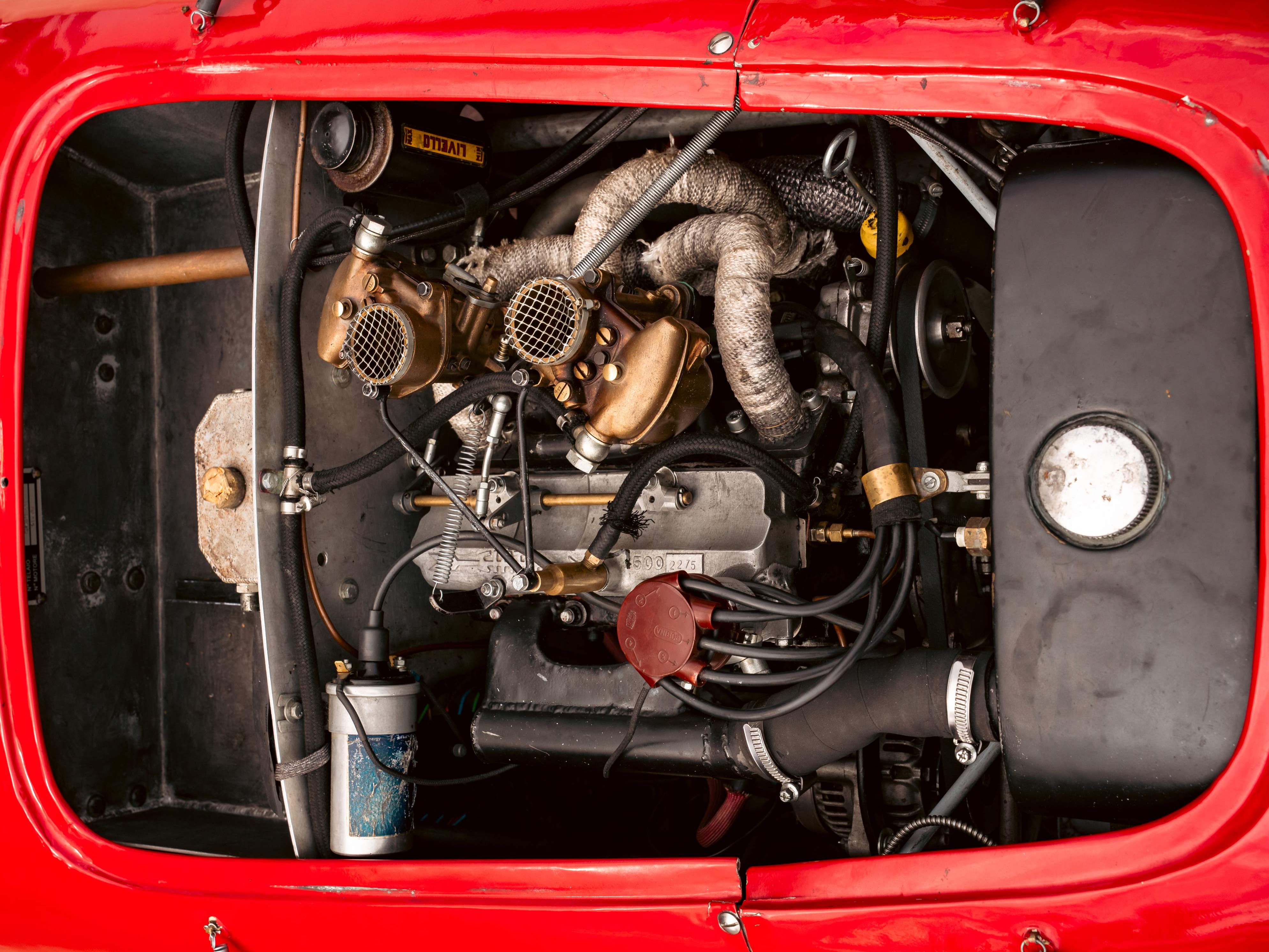
Under the hood, Dagrada equipped the 750 Sport with one of the early Giannini G1 engines, based on the Fiat 500 Topolino block, but extensively reworked for performance. This unit was paired with a Siata cylinder head, an upgrade that optimized airflow and combustion, allowing the 750cc inline-four engine to develop around 55 horsepower. With its lightweigth construction, the car achieved a strong power-to-weight ratio of approximately 6.2 kg/hp and could reach top speeds near 160 km/h, which was impressive for its class and era.
From the outset, chassis 0243849 was developed with competitive racing in mind and saw constant modification in its early life. These included changes to windshield height, and lighting configuration, as well as other small components to meet the racing criteria.
The earliest confirmed racing record of the car dates to July 1949, when it appeared at the ‘Notturna all’Ippodromo di Mirafiori’, driven by Franco Bordoni Bisleri. Bordoni placed second in class, signaling the car’s competitive potential. Shortly after, he entered the Susa-Moncenisio hill climb, finishing seventh overall.
In August 1949, Bordoni made his Sport category circuit racing debut at the Coppa Adriatica in Senigallia, in a strongly contested race: he finished third of his class, making several attempts to overtake Puma, who was first. At one point, Puma blocked him, forcing him into the straw bales. As a result, Bordoni also lost second place, which was claimed by Musso, driving a Stanguellini.
By September 1949, the car was proving consistently competitive winning both the Treponti - Teolo and the Vittorio Veneto - Cansiglio. In March 1950, the chassis was officially registered with the Milan ‘motorizzazione’ and received the ex-officio serial number ‘MI0243849MI’. The following month, ownership was formally transferred to Bordoni, although his use of the car in competition had already begun the previous season, suggesting it had functioned as a semi-works entry for Dagrada.
On April 23, 1950, Bordoni and Angelo Dagrada entered the 1000 Miglia together. Period photographs show the car equipped for the event, featuring a crossbar on the nose supporting twin auxiliary headlamps and a front-mounted license plate. The car recorded strong times through Rome, but it was forced to retire. Throughout 1950, Bordoni continued to race the Dagrada 750 Sport extensively, frequently placing in the top ranks of his class and achieving overall victories.
This car remained active in racing until mid-1953, with its final recorded appearance at the Varese–Campo dei Fiori hill climb, where it was raced by Giorgio Xeconti and modified with integrated fenders to comply with new regulations, finishing third of his class. After this, the car was retired from active competition but stayed in Bordoni’s ownership until July 1962.
That summer, the car was sold to Italo Ascani and re-registered in Perugia, in 1963. Later, in 1966, it was purchased by collector Giuseppe Bianchini, a noted expert in postwar Italian sports cars. In 2013, it was sold again to renowned collector Jan de Reu, before Dutch enthusiast Luc Brandts acquired it and initiated its participation in 1000 Miglia reenactments. Before our acquisition, Francesco Di Lauro took great care of the 750 Sport from 2020 to 2024.